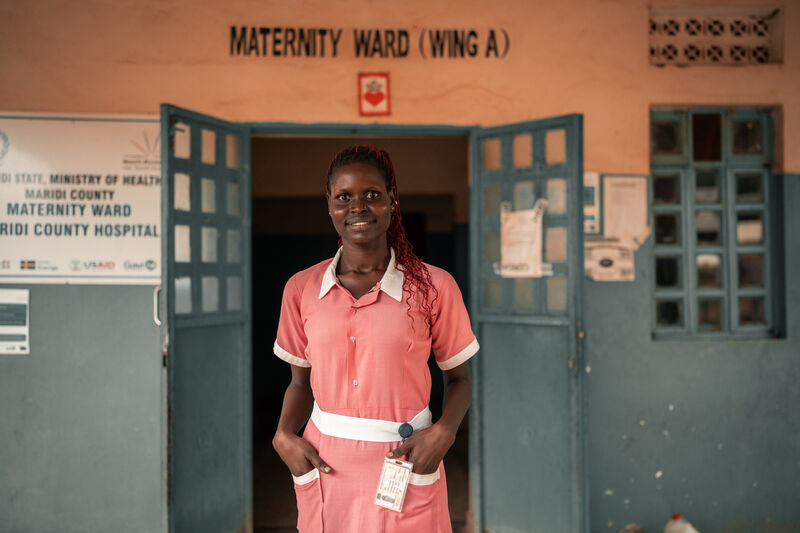
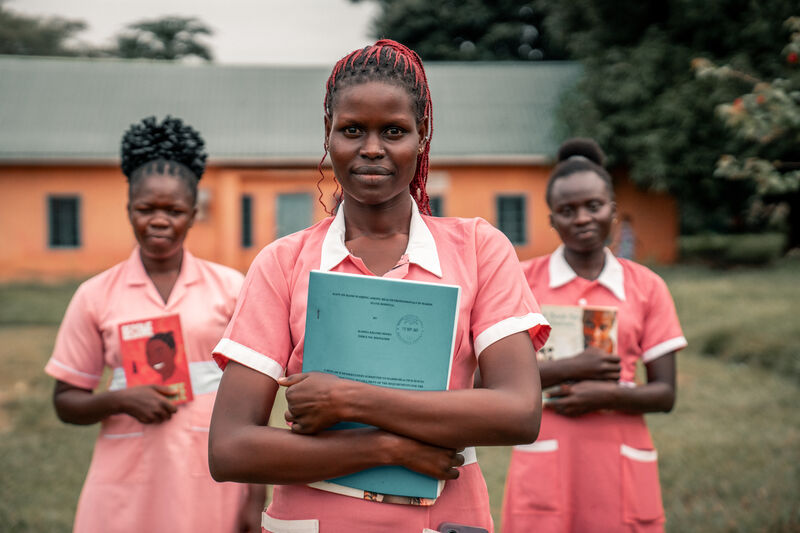
Becky came to Maridi from Tonj in Warrap State, Bahr el Ghazal Region, South Sudan to follow a long-held dream. Here, she tells us how she felt as a final-year midwifery student at Maridi Health Sciences Institute (MHSI).
Although Tonj will always be home to her, Becky grew up in two places. Born in South Sudan before independence, she spent most of her childhood in Uganda before returning to Tonj to complete her secondary school education.
“My growing up in these two places was great,” she says. “I had to learn two different cultures. I had to learn how different people interact, both in school and in the community. So it was actually great for me.”
Navigating between cultures – and finding ways to communicate as she does – has been one of the great themes of Becky’s life to date. Although she’s naturally curious and loves to meet different people, she says she lacked confidence until very recently. In fact, it was starting her midwifery training that forced her to believe in herself: Becky had to raise her own voice so she could help other women be heard.
“Being a midwife . . . for me it’s a personal thing. My community faces challenges, from pregnancy until delivery. Challenges of long distances from homes to facilities, which discourages pregnant women from seeking care at facilities. Medication is sometimes limited."
Becky Buong

"My people need a lot of help"
Growing up, Becky admired midwives from afar – and she saw how hard their jobs were. “The midwives [in Tonj] are limited [in number] and the few that are there, they are overloaded with work,” she observes. “When you’re pregnant, you have a lot of emotions: any minute, any time. It doesn’t take much to set you off. So when [women] reach the facility and see all the people in the queue ahead of them, they can feel frustrated. They just lose that appetite, and it makes it difficult for them to come back next time.”
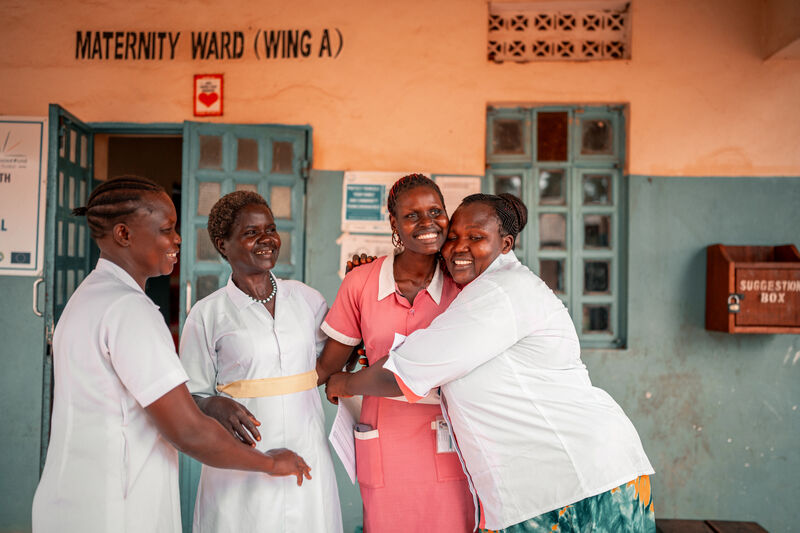
“When I saw that, [I realised] my people need a lot of help,” she remembers. “I was like, ‘If I have this knowledge then I can be able to do it.’” In order to gain that knowledge, Becky knew she’d need to leave home and travel across the country to embark on an intensive three-year course of study at Maridi Health Science Institute.
"I always knew I wanted to be a midwife"
“My dad wanted me to be a Clinical Officer, but I always knew I wanted to be a midwife,” says Becky.
Once at school [MHSI], some of her peers made the mistake of thinking she had followed the path her father had imagined for her. “When they saw me in the midwifery dress, they were like: ‘Why? Being a midwife is not nice, it’s not fun. You don’t get to wear the [white] coat, you just get to wear the dress.’”
It’s not what she’s wearing that motivates Becky: it’s what she is capable of when she’s dressed for work.
“Imagine there’s a woman on the couch that needs help,” she says. “Then you will be [standing there] in that white gown of yours. You will not be able to help her. But when I’m in my dress, I’ll be able to help her out.
“So that’s how I overcame my challenges with these students. And here I am today.”
Confidence is key for a midwife
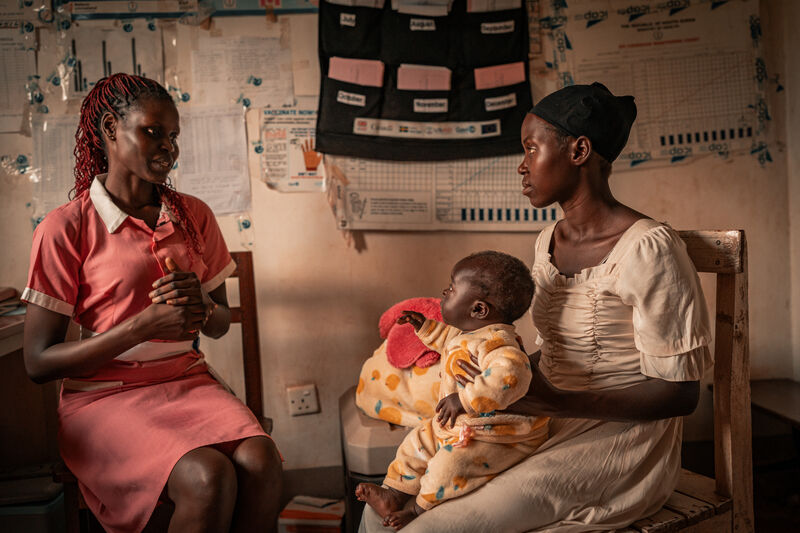
Looking back on her younger self, Becky says: “Confidence was I was this kind of person who, when I’m talking, or when somebody is talking to me, I’ll not look at you. I’ll just shy away. But when I started studying to be a midwife . . . I realised that I have to have confidence. For you to convince a mother, you will have to look at her, say what you want to say when you are looking at her directly in the eyes. If you don’t [look her in the eyes] it will be like you don’t know what you’re saying. She will just be in her head saying, ‘Ah, this person is not even confident. Why should I even listen to them?’”
“So I kept on practising. I kept practising talking to the mothers, looking into their eyes. I learnt communication skills: body language, eye contact and all that.
“There are some women who, they don’t talk through their mouth, they will just use their body to show you what they feel. So if you don’t know that, if you don’t look into their eyes, then you will not know.
“So I had to cope with it, and that’s how I built my [confidence].”

Understanding builds flexibility
Today, Becky is finding that her communication skills – her ability to be agile, and imagine what others might be feeling – are a real asset in her chosen career. “Being a midwife, you will interact with different women, different women with different emotions. Some of them, when they are pregnant, their emotions are tough. They don’t want to hear anybody’s voice except the person they choose to – the person they trust. And as a midwife, you have to have that heart. You have to be patient.”
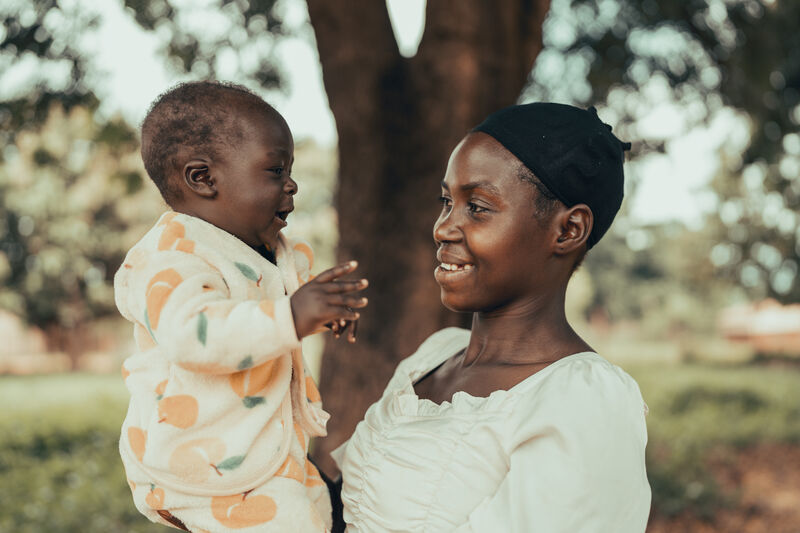
Creating connections – earning the trust of the women she supports – is a source of satisfaction for Becky. “Whatever a woman does, you just smile at her and keep talking to her nicely. Make sure that she gets to know you better. She will get used to you slowly, slowly. After two months, she’ll be so confident, so happy with you. And that’s what makes me like it [being a midwife]. Because it’s nice to make somebody feel loved. It’s really joyful. You feel like you’ve done something big to change somebody.”
"This is the day you've been waiting for"
When we meet her, Becky is with Susan, the first mum she ever delivered. Susan named her healthy baby named ‘Given’.
“When I booked her [as my patient] she was only three months pregnant,” remembers Becky. “We exchanged contacts, but she didn’t have a telephone of her own, so she gave me the one of the husband. Then we started communicating.”
The delivery itself caught Becky off-guard. She was playing netball with her friends from school when Susan called to say she was in labour.
“When she called me, I had to rush, came straight to the hospital [in my kit]. At first I was nervous. I was scared because it was my first baby to deliver. So it was kind of scary for me. But the midwife that was on duty that day, who was supporting me – because when you’re a student, you have an assistant who is an experienced midwife – was standing beside me.
“I just whispered to her – I told her, ‘I’m scared’. But she was like, ‘No, this is the day you have been waiting for, and you have to do it.’”
“So I said OK. I took deep breaths and the baby came. It was so great. It was so nice. I held the baby in my hands and it was good. But it was so slippery! I thought to myself: ‘What if I drop it? What if I’m not a good midwife?’.
In that moment, Becky remembered everything she’d learned about confidence. “I had to just say to myself, ‘No, I, I can’t [have these thoughts]. I have to concentrate and make sure nothing bad happens. And indeed, she didn’t have any [physical skin] tears. The baby was also fine and I was so happy that my first delivery didn’t have complications. I was so happy and I just went back to school with all the happiness. I was – it was overwhelming, actually. So the feeling . . . I don’t know if I can really explain it well, but I was so happy that day.”
“He [Given] is now four months this month and I am so happy for that.”
A relationship based on trust
Since the birth, Becky and Susan have remained close. Susan continues to look to Becky for information; the relationship of trust they developed in the early days of her pregnancy still counts for a lot.
“When she [Susan] got malaria, she called me,” says Becky. “She explained to me what she was feeling. I told her, ‘Okay, let’s go to the hospital’. We came, she tested positive, we gave her medications, and I transported her back home. Then from there, I started going to her [home] to visit her and to make sure that she takes the medication every time until she completed the course. And she was fine.”
I'm excited to go out there - and help
So what would Becky say to her nervous younger self?
“I would say it’s . . . it’s a good thing being a lady and it’s good to be in school. You have to study well. Get to choose what you want, the occupation you want: of your choice, not what people want for you, and focus on what is good for you.
“I just want them [younger women] to know that being educated is good. Getting to choose what you like is something very nice and they should focus on what they believe in. In South Sudan, ladies in some cultures don’t get the chance to go to school; others that even go to school, some of them get like this thing of [their families] saying, ‘We have got someone for you to marry’, so you’ll just drop out immediately. So I just want to say to those parents out there, it’s not only boys that can change the future. Ladies can do the same.”
On the cusp of graduation, Becky is ready to do just that. “I feel excited [about graduating],” she says. “I feel like I’ve survived a total three years of being in the midwifery course, so I just feel like I can’t wait to [use] what I have, what has been taught to me.
“And to also go out there and put it into practice. To help.”