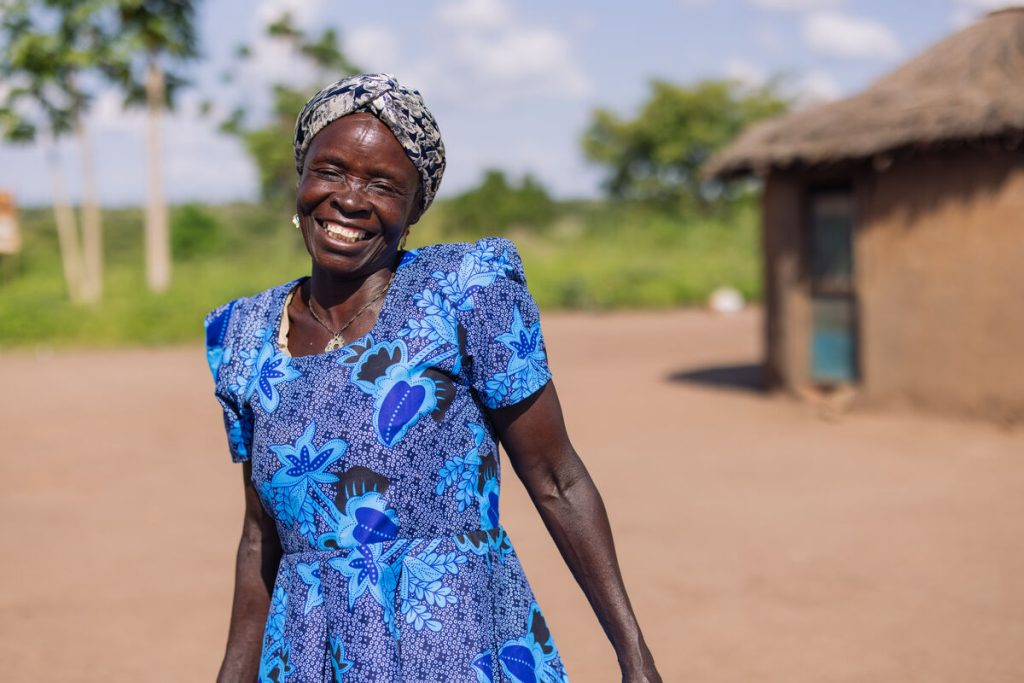
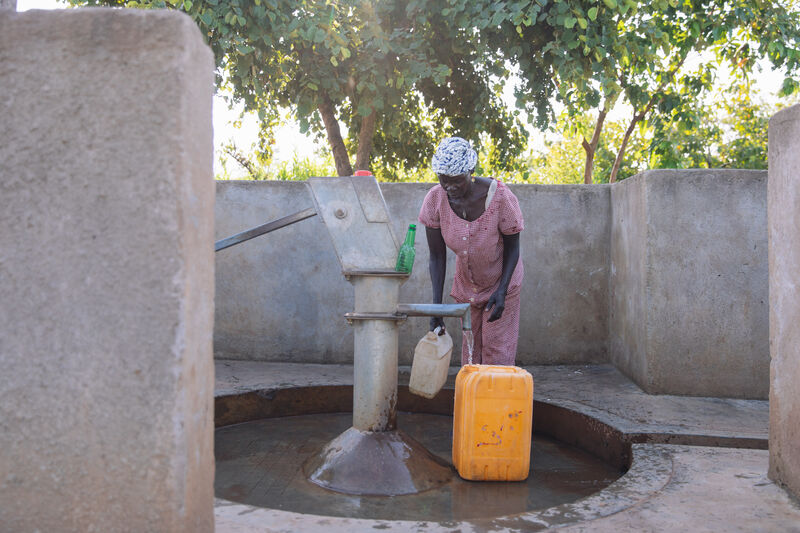
48-year-old farmer Christine Achiro lives in one of the hottest regions of Northern Uganda, just across the border from South Sudan. Her husband passed away in 2008, when she was pregnant with their now teenage daughter. As a working single mum of eight – and grandmother to three girls – Christine is used to shouldering burdens on her own. But lately, she’s been finding that her community is helping to lighten the load.
As a member of her village’s Water User Committee, Christine is a custodian of the borehole [a term used to describe a well] that Amref Health Africa recently built in the community. Together with other members of the Committee, she oversees its maintenance and upkeep, and ensures that the surroundings remain clean.
Women and water
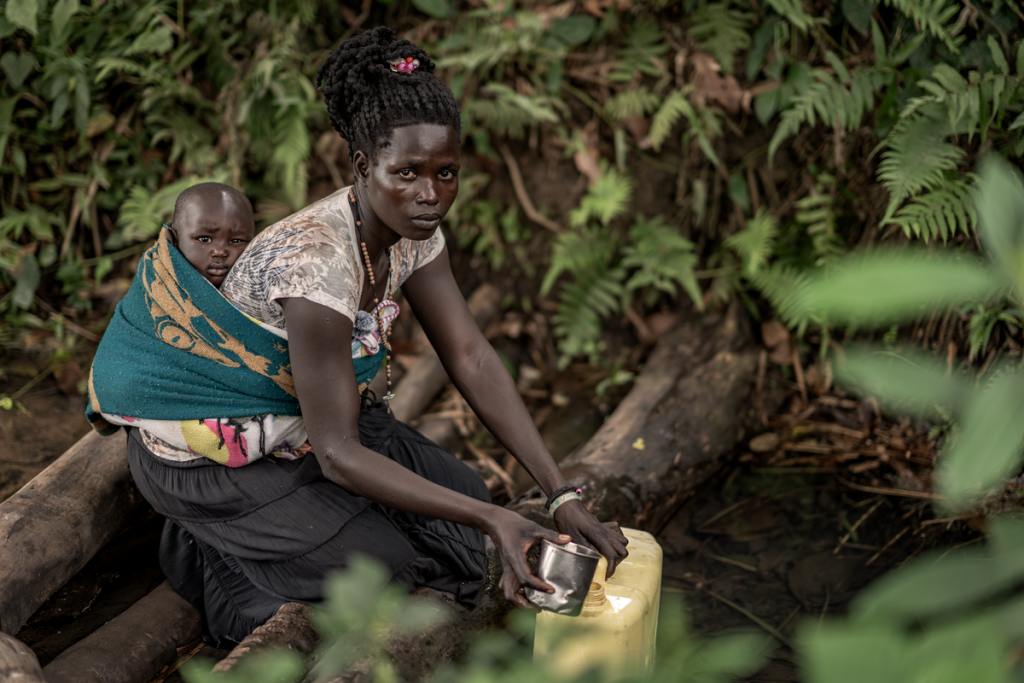
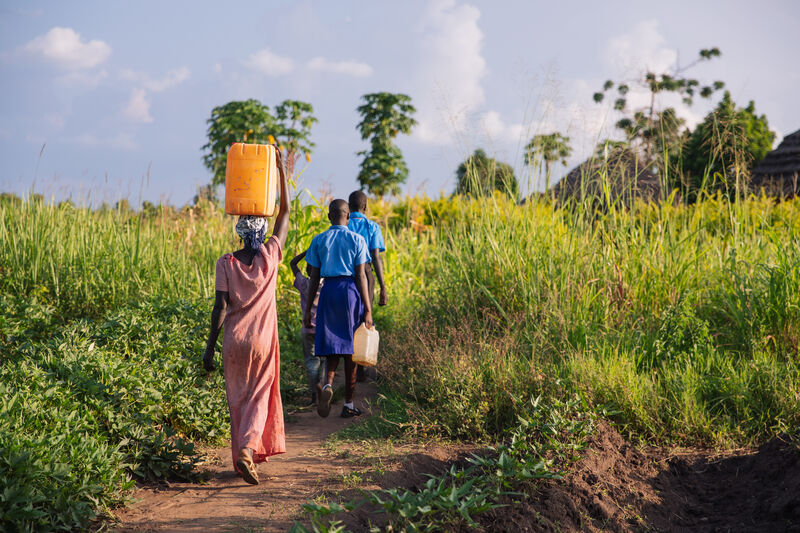
In the past, a lack of water close to home was a major challenge for Christine and her family. Before the borehole was built, they had to rely on untreated water sources. Chief among these was a stream located two kilometres from the family’s compound, which was often contaminated – and prone to flooding. As is common in Uganda, women and girls in the community were tasked with collecting water from distant sources using heavy water containers. This burdensome task, rooted in stereotypes and norms, often fell to Christine and her daughters and grand-daughters.
“We used to drink water from the stream and as a result I experienced stomach-aches and body rashes which made me continuously scratch my body,” Christine recalls. “I never had a good life.”
Christine regularly had to seek medical attention for her children and grand-children, who often fell ill from water-related diseases. “The dirty particles remained in the pots and cups used for drinking water. These made us feel so bad,” she remembers. “There was even a time when we didn’t know that the water was contaminated with a dead body – and so we kept drinking it.” Frequent trips to the hospital interrupted Christine’s farming and meant she was spending the little money she was earning on medication for the children.
The difference the borehole makes
The new borehole is located just a few metres from Christine’s home, and provides water for all of her family’s needs, including bathing, cooking, drinking, and even for her cows and goats. “Since the [clean] water was brought, we never experienced stomach aches and coughs. I enjoy bathing with it, and I feel good about it,” says Christine. “Our water pots and jerricans are clean, we feel good and there are no cases of malaria.”
For Christine, having clean water close to home represents not just good health but peace of mind. Previously, when she asked her grand-children to go and fetch water, she always feared they might not come home. Today, her three grand-daughters, Neve, Pauline and Janet, no longer have to do the two-kilometre commute multiple times a day. Instead, they are able to focus on their studies, and are all enthusiastically attending high school.
“[Now] the water source is near, I am able to send my children to fetch water unlike those days I could not send them due to fear of floods,” says Christine.
More about the borehole: The borehole in Christine’s village, Moyinya, is one of two drilled by Amref Health Africa in the area. It allows nearly 800 people to access water in a community that hosts thousands of refugees, putting added pressure on available resources.
Women lead the management of water
As one of the caretakers of the borehole, Christine is responsible for making decisions about its management, a key step in involving community members – women in particular – in the management of critical water sources.
Amref Health Africa’s approach to improving access to water and sanitation in Uganda reflects not just our commitment to communities, but our deep understanding of those communities. “Ugandans are very communal and take care of each other,” says Comfort Hajra Mukasa, WASH Programme Manager at Amref Uganda. “When mobilised for a common cause, they are very willing to take it up for the good of everyone.”
Christine is one of those ensuring no-one is left behind. The well belongs to the whole community: everyone benefits from it, and everyone is determined to protect it.
“We want to keep the water point clean and functional,” she says. “I want us [all] to contribute some money so that in case the borehole is faulty we can call a mechanic to work on it. We want to maintain our borehole so that we will not drink dirty water again.”
Clean water brings joy
Today, Christine spends most of her days in her garden, earning her livelihood as a small-scale farmer, growing crops such as cassava, beans, and maize. Most of what she grows is for her family’s consumption, but when she’s lucky, she manages to sell some at the local market.
“Since the death of my husband I did not want to go anywhere because relocation would cause my family to suffer,” she says. “But at some point, I wanted to relocate due to fear of losing my children in the river, especially when it floods. But with the presence of the borehole, I will continue to live here for the rest of my life.”
“I am happy because I have access to clean water, I can cook and eat. My family makes me happy, we chat and laugh out of happiness.”
All images (c) Amref Health Africa/Sarah Waiswa/2023